
A Lot of Women Learned Shame Before They Learned Pleasure

There are a lot of women walking around believing they have intimacy issues when really they have shame issues.
And I do not just mean the obvious kind of shame where somebody directly told you sex was bad, dirty, sinful, or wrong. Sometimes the shame is quieter than that. Sometimes it shows up as constantly overthinking yourself during intimacy. Sometimes it sounds like guilt every time you want more emotionally or sexually. Sometimes it looks like shutting down, disconnecting from your body, struggling to communicate honestly, or feeling like your needs automatically make you difficult.
A lot of women learned how to be desirable before they ever learned how to actually feel safe, connected, honest, or present during intimacy, and those are two completely different things.
That disconnect does not come out of nowhere either.
A lot of us grew up receiving messages that taught us our value was connected to how agreeable, attractive, wanted, selfless, accommodating, or “good” we could be. We learned how to make other people comfortable before we learned how to ask ourselves what actually felt comfortable for us.
And whew… that follows people into adulthood more than they realize.
There Are a Lot of Women Carrying Shame Who Don’t Even Realize It
Sexual shame does not always sound dramatic.
Sometimes it sounds like:
“I don’t even know what I like.”
“I feel awkward asking for what I want.”
“I struggle to stay present.”
“I feel guilty for wanting more.”
“I know how to please other people better than I know how to connect to myself.”
A lot of women have spent so much time managing other people’s comfort, expectations, emotions, and desires that they genuinely do not know what it feels like to fully relax inside intimacy themselves.
And honestly, because disconnection gets normalized so heavily, a lot of people assume this is just how intimacy works.
No. A lot of people are surviving intimacy, not actually experiencing connection inside it.
There is a difference.
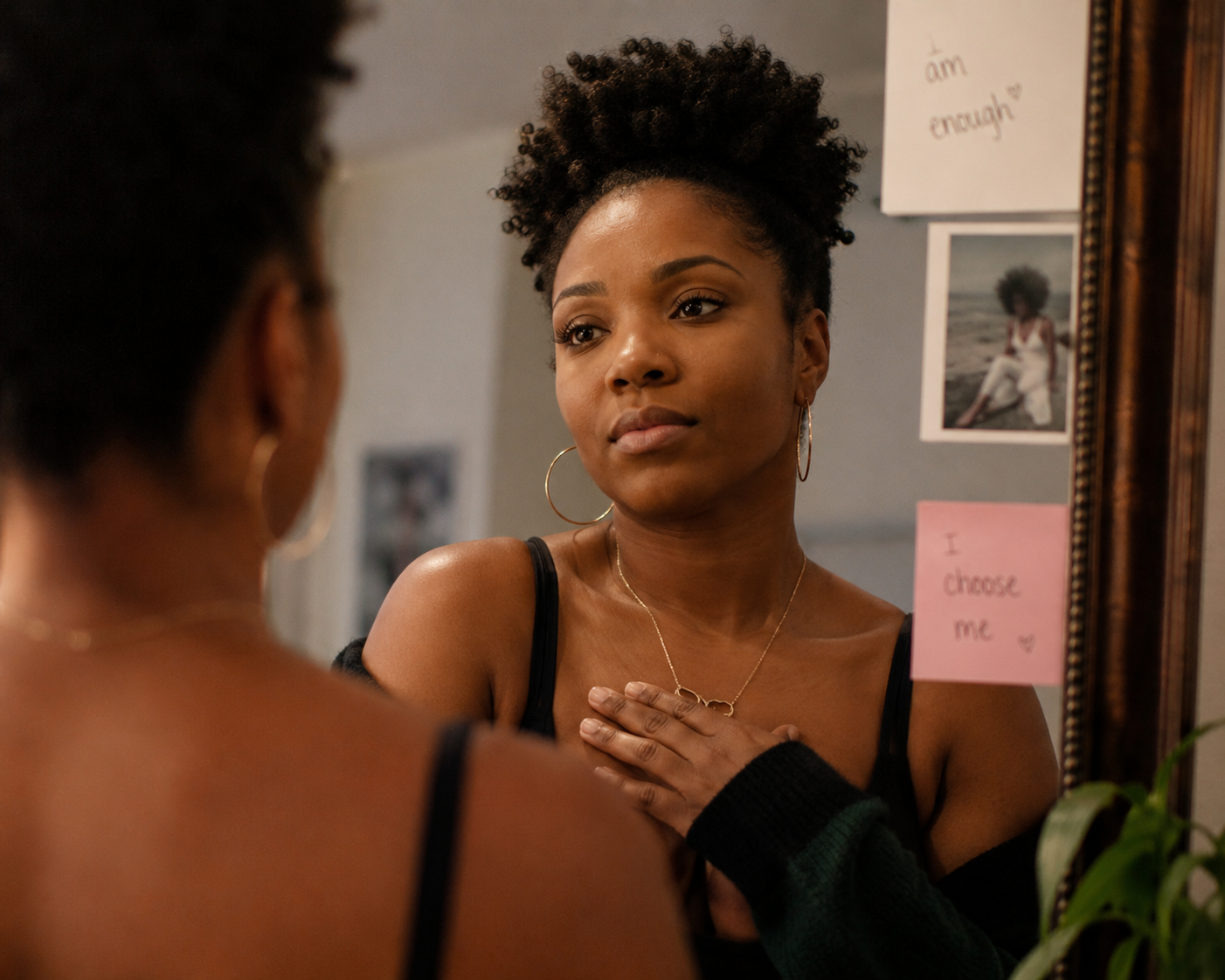
Intimacy Was Never Supposed to Feel Like Performance
This might make some people uncomfortable, but a lot of women are having sex while completely disconnected from themselves.
They are performing.
Managing.
Monitoring themselves.
Trying to avoid judgment.
Trying to avoid rejection.
Trying to avoid conflict.
Trying to avoid being “too much.”
Trying to maintain connections at the expense of honesty.
And because so many women were taught that being wanted matters more than feeling connected to themselves, they end up treating intimacy like another area where they have to perform correctly instead of something they are actually allowed to experience.
That pressure kills connections.
You cannot fully relax into intimacy while constantly evaluating yourself from the outside. You cannot fully experience pleasure while simultaneously abandoning yourself in real time.
A lot of women know how to look desirable far better than they know how to feel emotionally safe, sexually honest, or genuinely connected during intimacy.
That is not a personal failure.
That is conditioning.
And unlearning that conditioning requires a level of honesty that a lot of people have never been given permission to have.
The kind of honesty that says:
“I actually don’t know what I want.”
“I struggle to stay connected during intimacy.”
“I’ve spent years prioritizing everybody else.”
“I learned to survive through performance.”
“I feel disconnected from my own body.”
That level of honesty can feel uncomfortable, but honestly? It is also where real healing starts.
Pleasure Is Bigger Than Sex
And this matters because people hear the word “pleasure” and immediately reduce it to orgasm or sexual performance.
That is not all I mean.
Pleasure is feeling emotionally safe enough to relax.
Pleasure is being able to communicate honestly without fear that honesty will cost you connections. Pleasure is being touched in ways that actually feel good, rather than just tolerated. Pleasure is feeling connected to your body instead of disconnected from it. Pleasure is being able to say yes and no honestly.
Pleasure is also softness.
Rest.
Safety.
Breathing deeply.
Feeling emotionally connected instead of emotionally managed.
Some women have never experienced intimacy without anxiety attached to it.
That matters.

ome of Y’all Learned Survival Before You Learned Connection
And before somebody immediately jumps to “just love yourself,” please understand that shame does not disappear just because somebody tells you to be more confident.
Especially if shame got attached to your identity early.
Especially if your body was constantly criticized, watched, sexualized, or judged.
Especially if you grew up around purity culture, rigid religious messaging, silence around sex, emotionally unsafe relationships, or environments where women’s desires were treated like threats instead of something human.
That kind of conditioning runs deep.
A lot of women learned how to survive relationships before they ever learned how to feel emotionally safe inside them. They learned how to disconnect, minimize themselves, suppress needs, avoid conflict, and perform wellness long before they ever learned how to fully trust themselves.
And honestly, many women are exhausted because of it.
Because there is a difference between being desired and actually feeling safe enough to be fully seen.
There is a difference between maintaining connection and experiencing intimacy.
And there is definitely a difference between performing pleasure and actually feeling it.

You Are Allowed to Want More Than Survival Mode Intimacy
You are allowed to want intimacy that feels emotionally safe.
You are allowed to want pleasure without guilt attached to it.
You are allowed to stop treating your needs like inconveniences.
And you are absolutely allowed to stop abandoning yourself just to maintain connection with other people.
Because shame has never created healthy intimacy.
It creates silence.
Performance.
Fear.
Disconnection.
Resentment.
Emotional hiding.
Healthy intimacy requires honesty.
Not perfection.
Not performance.
Not pretending.
Honesty.
And for a lot of women, that honesty starts with realizing they learned shame long before they ever learned connection, desire, safety, or pleasure.
That realization alone can change a lot.
If this conversation hit somewhere deep for you, download my free reflection guide:
What Sexual Shame Actually Sounds Like
It’ll help you recognize some of the subtle ways shame, performance, self-abandonment, and emotional disconnection may be showing up in your relationship with intimacy, desire, and yourself.