You're Not Private. You're Protecting Something.
The quiet cost of keeping everybody at arm's length.

Nobody who avoids intimacy thinks they're avoiding anything.
You think you're busy. Independent. Private. Just not the type who spills your business to everybody. The distance doesn't feel like a choice. It feels like who you are.
And that's exactly why it never gets questioned. You don't examine a personality. You just live inside it.
But here's what I need you to sit with. Avoidance has a shape. It runs on a pattern. It shows up the same way, costs you the same things, and protects you from the same stuff every single time. Once you see what you're actually dodging when you keep people at a distance, not the story you tell yourself, the whole thing cracks open.
The Walls Made Sense. Once.
Distance is protection. Almost always.
It keeps you safe from the things your body learned to read as danger a long time ago. Rejection. Getting swallowed up by somebody else's needs. Losing control. Being seen in a way you can't manage or clean up after.
Those aren't random fears. They came from somewhere. Usually somewhere early, where getting close to somebody got you hurt. Where handling everything yourself was the only thing that didn't let you down.
So you built the wall. And back then? The wall was smart.
Here's the problem. The protection outlasts the threat.
The distance you needed at fourteen doesn't know the danger is over. So it follows you into rooms where it's not needed anymore. It blocks the exact closeness you might actually want, with people who never gave you a reason to brace.
And the worst part is it works. Distance does keep the pain out. So you keep doing it. You never find out if this relationship could've held the real you, because you never let it try.
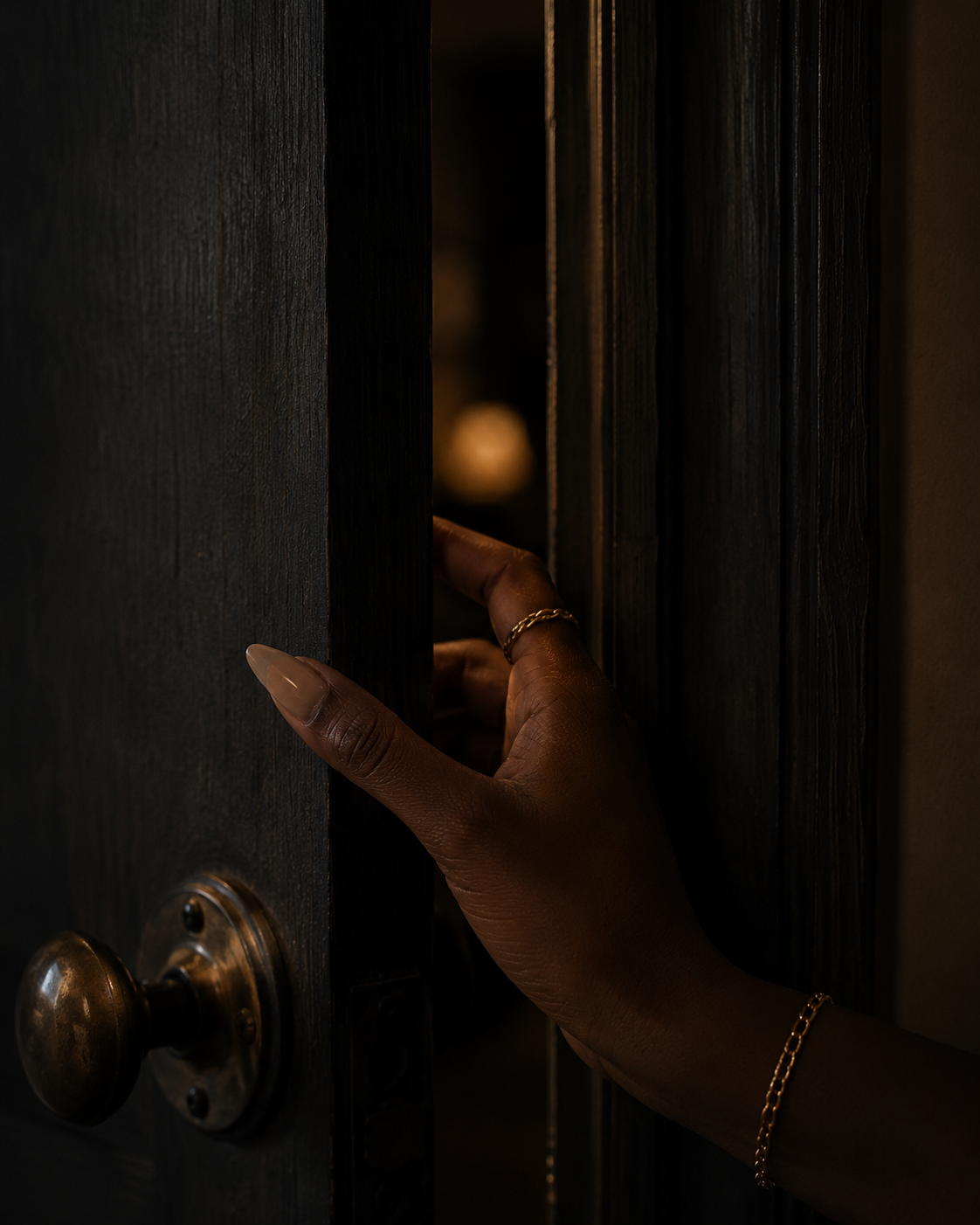
Nobody Sends You a Bill for This
The cost of avoiding intimacy isn't loud. It's not a breakup or a blowup. It's a slow leak.
It looks like being lonely in a room full of people who love you.
It looks like relationships that are nice. Pleasant. Easy. And never quite enough.
It looks like that nagging feeling that folks know your surface but not your center. And the quieter, uglier suspicion underneath it. If they ever saw the real thing, maybe they'd leave.
And it compounds. That's the part nobody warns you about. The longer you practice distance, the more natural it feels and the more terrifying closeness gets. Vulnerability, letting people in, being honest about what's going on with you. Those are skills. And skills you don't use, you lose.
What started as a smart move becomes a cage. One day you're not even sure you could open up if you wanted to. That's the real cost. Not just what you're missing out on. It's how small your idea of what you're capable of gets.

Walk Toward the Thing You Keep Dodging
Now hear me, because this is where people panic. Fixing this does not mean ripping yourself open and trauma-dumping on the next person who's nice to you.
It means small moves. On purpose. Toward the discomfort you've been building your whole love life around avoiding.
Staying in the conversation ten seconds longer than feels okay.
Answering the real question instead of dodging into a joke or a topic change.
Letting somebody see you're struggling instead of serving them the version of you that's got it all handled.
Every one of those tiny moves is you collecting evidence. Evidence that closeness doesn't automatically end the way your body keeps predicting. And the evidence stacks up. Slowly, that automatic wall starts to feel less like a requirement.
This isn't about forcing yourself to be an open book. It's about testing, in small doses, whether the danger you keep bracing for is even still in the room. Or whether you've been living inside an old memory long after the threat packed up and left.

Real Talk
When you avoid intimacy, you're not avoiding a person. You're avoiding what closeness asks of you. The risk of being seen. The chance of rejection. The loss of control that comes with actually needing somebody.
The protection is real. But so is the bill.
And the only way to find out if the danger's still real is to walk toward it. Slow. On purpose. And watch what actually happens.